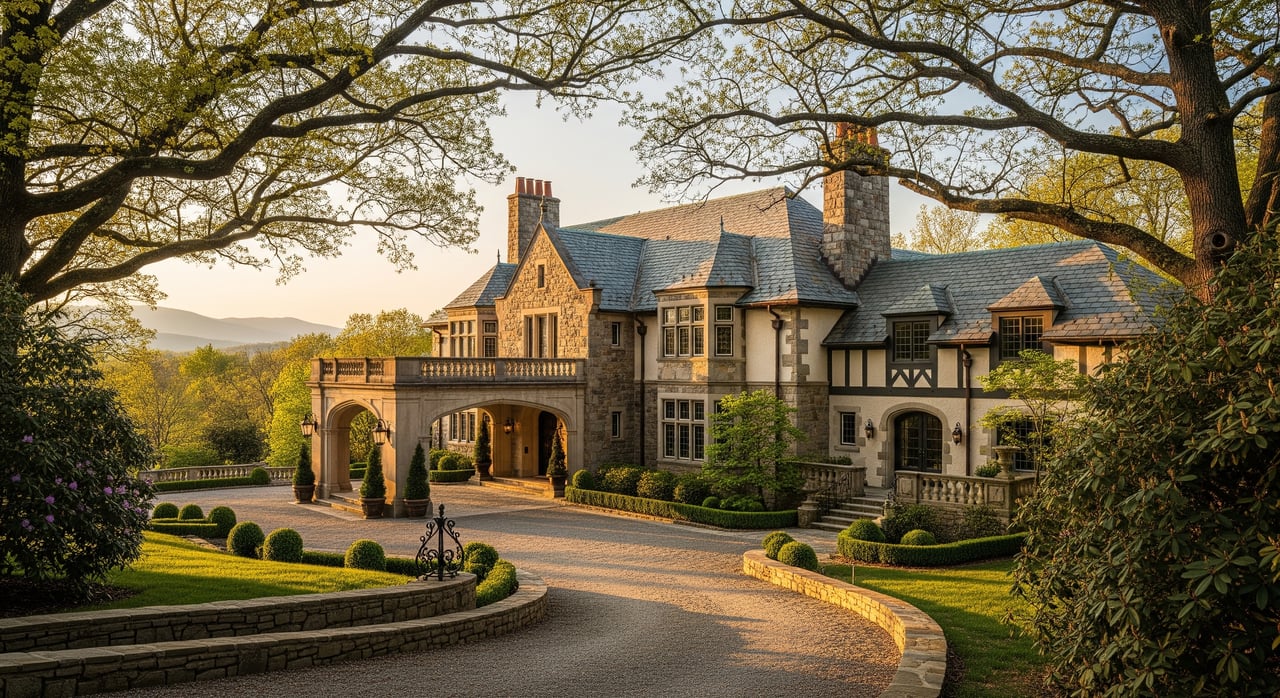
What makes one Biltmore Forest home soar in value while another lags, even when they look similar on paper? If you are weighing a purchase or considering a sale, the difference can feel opaque. In reality, there is a clear set of factors that drive premium pricing here. You will learn how land, architecture, setting, and market timing work together in this estate town. Let’s dive in.
Biltmore Forest context
Estate-town character and history
Biltmore Forest sits beside the Biltmore Estate and near downtown Asheville. It was planned in the early 20th century as a low-density residential enclave with large wooded lots and architect-designed homes. This legacy sets expectations for lot size, setbacks, and architectural quality. Buyers come for privacy, a park-like feel, and an estate lifestyle close to arts, dining, and outdoor recreation.
Why value differs from broader Asheville
In Biltmore Forest, land and setting often drive price more than in typical suburban luxury areas. Inventory of estate-caliber properties is consistently limited due to the small town footprint and low-density zoning. That scarcity supports land value. Premiums follow privacy, architectural pedigree, and mature landscapes more than shared amenities or uniform new construction.
Who buys here and what they seek
The buyer pool blends local residents, relocation buyers, and second-home owners. Each segment values features a bit differently. Local buyers often focus on everyday function and systems. Second-home and relocation buyers lean into privacy, immediate access to Biltmore Village and Asheville culture, and a home that fits the town’s estate character.
Property-level factors that move price
Land, lot, and topography
Acreage matters. Larger parcels support privacy, lawn and garden programs, and the option for a pool or guest house. But not all acres carry the same value. Usable topography is key: flat or gently sloped building areas with room for outdoor living tend to command higher prices than similarly sized steep sites. Orientation and buffering from neighbors also shape value, as do interior locations away from busier roads.
Setting and views
Mountain and long-range Blue Ridge views are scarce within Biltmore Forest, which makes them more valuable when present. Beyond views, the town’s garden and park-like settings are a major draw. Mature hardwoods, specimen plantings, and historically designed landscapes increase perceived estate quality and resale appeal. A beautiful site that reads as a private sanctuary is often the single strongest value driver.
Architecture and provenance
Architect-designed homes and properties with documented history or notable designers can carry meaningful premiums. Historic integrity matters. Intact period details such as original millwork, windows, and masonry appeal to buyers seeking authenticity. That said, compromised historic homes that need sensitive renovation can face pricing pressure due to the cost and complexity of proper updates. Style fit counts too. Tudor, Colonial Revival, and Arts & Crafts language tends to align with neighborhood expectations. Contemporary infill can succeed when design is thoughtful and well integrated with the site.
Condition and systems
At the top end, buyers expect mechanical soundness and a polished daily experience. Roofing, foundation, windows, HVAC, and electrical should be current or well maintained. Dated or undersized kitchens, baths, and service areas often limit offers. Quality of finish also matters. Custom craftsmanship and high-grade materials raise perceived value more than basic builder upgrades, especially in millwork, stone, tile, and hardware.
Amenities and accessory structures
Pools, guest cottages, multi-bay garages, wine rooms, theaters, smart-home systems, and elevators can add value when sized and sited in line with the lot and neighborhood context. Outdoor living carries strong appeal in Asheville’s climate. Terraces, covered patios, built-in grills, and integrated landscapes perform well. Overbuilt hardscape or structures that reduce usable green space can turn some buyers away.
Energy and insurance considerations
Energy-efficiency upgrades and modern insulation improve comfort and operating costs, which supports marketability. Because many parcels are wooded, buyers and sellers should also consider insurance factors tied to wind, limb, and wildfire exposure. Higher carrying costs or mitigation needs can narrow the buyer pool, which affects net value.
Neighborhood and community influences
Proximity to club and Biltmore Estate
Closeness to the private country club and golf course often increases desirability. Homes that adjoin or are a short drive to these amenities can see a premium when buyers value that lifestyle. Access to Biltmore Estate and the dining and shopping of Biltmore Village is also a consistent plus, especially for second-home buyers who want immediate connections to cultural experiences.
Zoning and protections
Low-density zoning and setback requirements limit subdivision and protect the town’s scale. This governance helps preserve the estate feel and supports land values over time. Where design review or landscape protections apply, they tend to stabilize quality and protect canopy, which reinforces the town’s identity.
Schools, services, and access
For year-round buyers, access to area schools and services is part of the location equation. Other buyers place more weight on fast connections to downtown Asheville or walkability to Biltmore Village. Short, easy drives to cultural venues and restaurants often push a property higher on the list.
Tree canopy and streetscape
The mature canopy and consistent setbacks give Biltmore Forest its signature look. Streets that retain this character usually support higher values. Large-scale tree removal or utility intrusions can erode the estate aesthetic and reduce a home’s perceived quality.
Market dynamics and strategy
Valuing unique, estate properties
With few direct comparables, estate sales in Biltmore Forest require a nuanced approach. Professionals often separate land value from structure value, then adjust for setting quality, architectural pedigree, and condition. Price-per-square-foot is a blunt tool here. Lot size, privacy, and landscape integrity usually carry more weight than raw interior footage.
Buyer psychology and segmentation
Different buyers prize different things. Local residents may prioritize reliable systems, functional layouts, and practical daily living. Second-home and relocation buyers often respond to privacy, a compelling story, and easy access to amenities. Emotional factors are real in this market. The feel of the site, the home’s narrative, and the promise of a private retreat can motivate premium offers beyond a simple feature checklist.
Timing and seasonality
Asheville’s tourism cycles can influence showing traffic. Peak foliage season and popular travel windows may bring more second-home buyers to town. Listing strategies often consider when target buyers are most likely to visit. The right timing can help a distinctive property capture outsized attention.
Pricing and presentation
Price to highlight the differentiator that truly sets the property apart. If land and privacy are the lead, showcase them with aerials, site plans, and garden photography. If historic pedigree is the draw, center the story on architecture and craftsmanship. For renovated homes, emphasize modern systems and refined finishes that make the estate lifestyle easy from day one.
Quick checklist for sellers
- Lead with the site: acreage, usable yard, topography, privacy, and views.
- Verify systems: roof, HVAC, electrical, plumbing, windows, and envelope.
- Elevate daily living: kitchen design, primary suite quality, storage, and flow.
- Curate outdoor living: terraces, lighting, gardens, and a clear landscape plan.
- Clarify carrying costs: utilities, insurance, landscaping, and maintenance.
- Prepare documentation: surveys, site plans, renovation records, and any historic notes.
Quick checklist for buyers
- Walk the land: evaluate usability, orientation, drainage, and privacy buffers.
- Weigh setting vs. structure: a great site can justify future upgrades.
- Confirm context: proximity to club, Biltmore Estate, and travel routes.
- Assess renovation scope: prioritize systems and service spaces first.
- Consider insurance and resilience: canopy management and defensible space.
How two similar homes diverge on price
Two houses can share square footage and bedroom counts yet diverge widely in value. The common reasons are straightforward:
- One sits on a larger, more usable interior lot with better privacy.
- One has mature, designed landscaping that frames terraces and lawns.
- One is architect-designed with intact period details and documented history.
- One has current systems, a modern kitchen, and a spa-like primary suite.
- One is closer to the club or Biltmore Village, which aligns with the buyer’s lifestyle.
A single standout factor can move the needle, but the biggest premiums appear when several of these stack together.
Work with an advisor who knows estates
In Biltmore Forest, success comes from reading the site first, then aligning architecture, condition, and story with the right buyer segment. Whether you are preparing a legacy sale or searching for a private retreat, you deserve discreet guidance, construction‑literate insight, and marketing that reaches qualified buyers. For tailored strategy and a confidential conversation, connect with Marilyn Wright. Request a private consultation.
FAQs
What defines premium value in Biltmore Forest?
- Land quality, privacy, mature landscape, architectural pedigree, condition and systems, and proximity to the country club or Biltmore Estate typically drive the highest prices.
Why do similar-size homes sell for different prices?
- Differences in lot size and usability, tree canopy and setting, design pedigree, renovation level, and location within the town explain most pricing gaps.
How much do mountain views matter in this town?
- Long-range views are relatively scarce inside Biltmore Forest, so when present, they usually add a noticeable premium compared to similar homes without them.
Do historic features help or hurt resale?
- Intact historic character often helps value for buyers who prize authenticity, while heavy alteration needs can reduce offers due to preservation-sensitive renovation costs.
Does being near the country club raise prices?
- Proximity commonly raises desirability for buyers who value golf and club access, though the size of the premium depends on individual priorities and membership specifics.
What should I upgrade before listing an older estate?
- Focus first on systems and the daily experience: roof and HVAC health, a professionally designed kitchen, a refined primary suite, and inviting outdoor living spaces.
