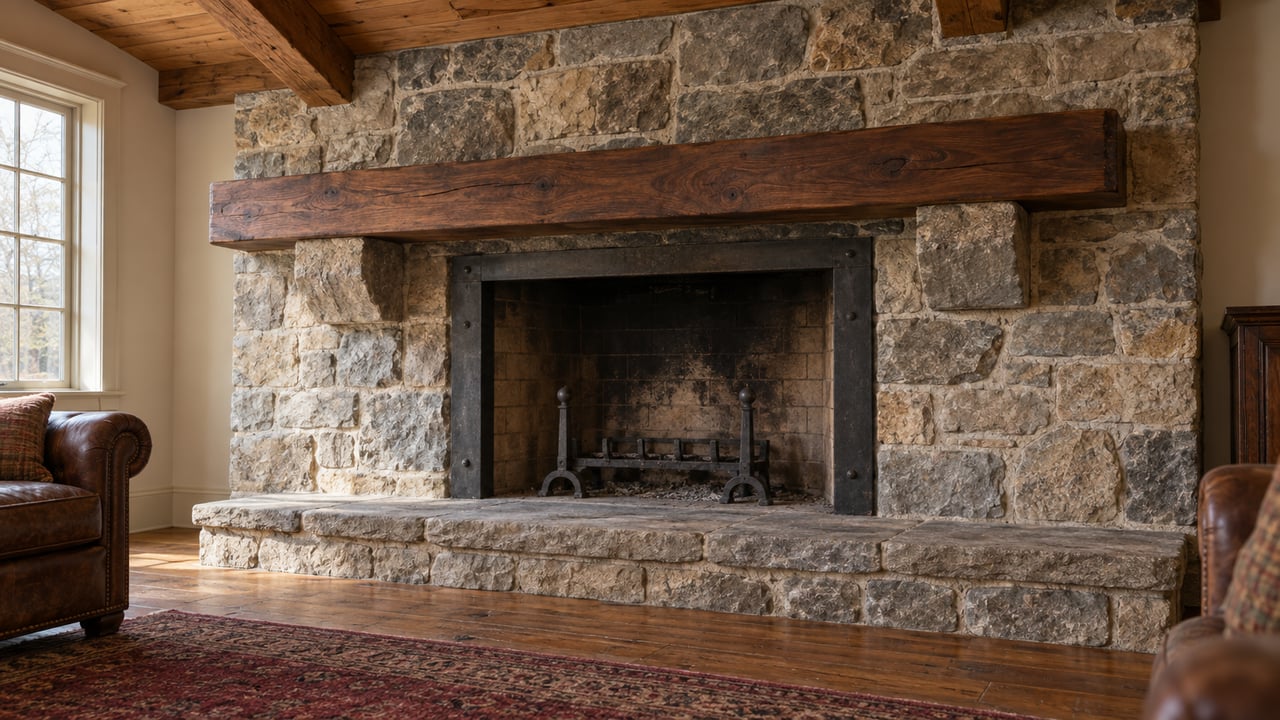
Echoes of the Forest's account of the mantel story begins with the Biltmore Forest commissioner responding to Liisa Andreassen's idea for what to do with a fallen tree: "The Friends of the Forest need to hear this." It sounds like a small line for a small problem. Her proposal led to a black walnut mantel that now sits over the fireplace at Town Hall, 355 Vanderbilt Road, and a story that reaches back a hundred years before Hurricane Helene ever touched this ground.
Most of what gets written about Biltmore Forest treats it as scenery: old trees, a golf course, quiet streets. What gets missed is that this is a town with a working habit of turning damaged wood into something permanent, and that habit did not start in September 2024. It started when the neighborhood did.
A Walk Through What Was Left
After Helene tore through Western North Carolina, Andreassen, who runs the nonprofit Echoes of the Forest, walked among the fallen trees around Biltmore Forest. Statewide, the storm's damage bill topped $59.6 billion and left more than 800,000 acres of forestland damaged, according to figures reported alongside the mantel's origin story. Locally, Asheville Greenworks has estimated that as much as 40 percent of the region's tree canopy was damaged or destroyed, a figure the group's community forestry manager gave to the Biltmore Beacon this year.
Andreassen's idea was not to grieve the loss and move on. It was to give the downed trees a second use. She brought the proposal to the Town, which connected her with Friends of Biltmore Forest, the citizen group whose work already centers on beautifying public spaces and aligning new projects with the town's historic character. Between a nonprofit founder walking a debris field and a town stewardship committee that already existed for exactly this kind of decision, the mantel had a path forward before a single cut was made.
Six Weeks in Woodfin
The tree itself grew on land that once belonged to the Biltmore Estate, the same land the town of Biltmore Forest was carved from when it incorporated in 1923. Master woodworker Kwadwo Som-Pimpong took on the job of turning it into something a town hall could use for the next century. He found the piece he needed at Sundried Lumber in Woodfin, then spent six weeks solar kilning the wood before it was ready to carve.
The result went up on the Town Hall hearth on February 17, 2026, in an event that paired the unveiling with a talk from Dr. Dave Ellum, professor of ecological forestry and dean of land resources at Warren Wilson College. Ellum holds a doctorate from Yale and has spent more than fifteen years at Warren Wilson studying how forests come back after they've been knocked down. His talk, on the value of native species in reforestation, ran from 5:30 to roughly 6:30 that evening. The mantel was unveiled at 7.
Two Floods in the Region's History
The mantel's story also reaches back to a flood in the region. In July 1916, the Swannanoa River flooded and wiped out the Biltmore Estate's nursery operation, a business that had been a real source of income for the estate. The flood hit the Village hard enough to be remembered as a defining setback in the estate's early economics.
Helene, in 2024, put the Swannanoa over its banks again, cresting more than 27 feet and tearing up streets and sidewalks in Biltmore Village, just down the road from where the tree stood. A black walnut that did not survive Helene became a mantel for Town Hall in Biltmore Forest, an object meant to outlast the storm that killed it.
A Town That Already Knew How to Do This
Biltmore Forest was never only a residential address. From its early years, craftsmanship was part of what the place was for. Silversmith and architect William Waldo Dodge opened a shop on Vanderbilt Road, and a woodworking operation called The Artisan Shop once stood a few doors down at 363 Vanderbilt. The tradition of turning raw material into something built by hand was, by design, as much a feature of the neighborhood as its tree cover.
Seen against that background, the mantel is not a one-time gesture of resilience. It's the same move the town has made before, applied to a storm nobody asked for. The tree committee's Reforest the Forest speaker series, which brought in Ellum for the mantel unveiling, continues to run public talks on regeneration and native species, meaning the conversation the mantel represents did not end the night the sheet came off the wood.
Where the Story Sits Now
If you want to see the mantel, Town Hall is a public building at 355 Vanderbilt Road. The walk there passes through the part of the neighborhood most residents already know by feel: Arborvale Road's tree-lined stretch, built for walking and biking rather than through-traffic, and Brooklawn Park, one of the small green spaces distributed through the town rather than concentrated in one place.
A few blocks over on Stuyvesant Road sits Biltmore Forest Country Club, founded in 1922 on a Donald Ross-designed course, its 135 acres and 47,000-square-foot clubhouse a fixture of the same era that produced Dodge's silversmith shop and the original Artisan Shop. The club added a new athletic complex in 2023, but the golf course and the historic clubhouse are the parts that have stood since the neighborhood's founding decade. It is private, so it's not a stop on a walking loop, but it's part of what makes Stuyvesant Road recognizable from a distance.
For dinner after a walk, Corner Kitchen sits just outside the town line in Biltmore Village, an 1895 house turned into a Southern-fare restaurant that has become one of the area's more reliable dinner spots for people who live nearby rather than people passing through on a Biltmore Estate visit.
What the Mantel Actually Settles
None of this required a marketing plan. A woman walked through storm debris with an idea. A town commissioner connected her to the right committee. A woodworker in Woodfin spent six weeks getting the kilning right. A professor gave a talk about how forests come back. And the walnut's second life gave the town a way to remember what the storm took.
The next time the Tree Committee schedules a Reforest the Forest talk, it will happen a few feet from a fireplace that already answered the question the series keeps asking.
If you're in Biltmore Forest often enough to have an opinion about which park bench in Brooklawn gets the better afternoon light, you already know the town better than any outside account of it. For a conversation about what else is changing in this neighborhood, from the ground up, reach out directly to Marilyn Wright.
