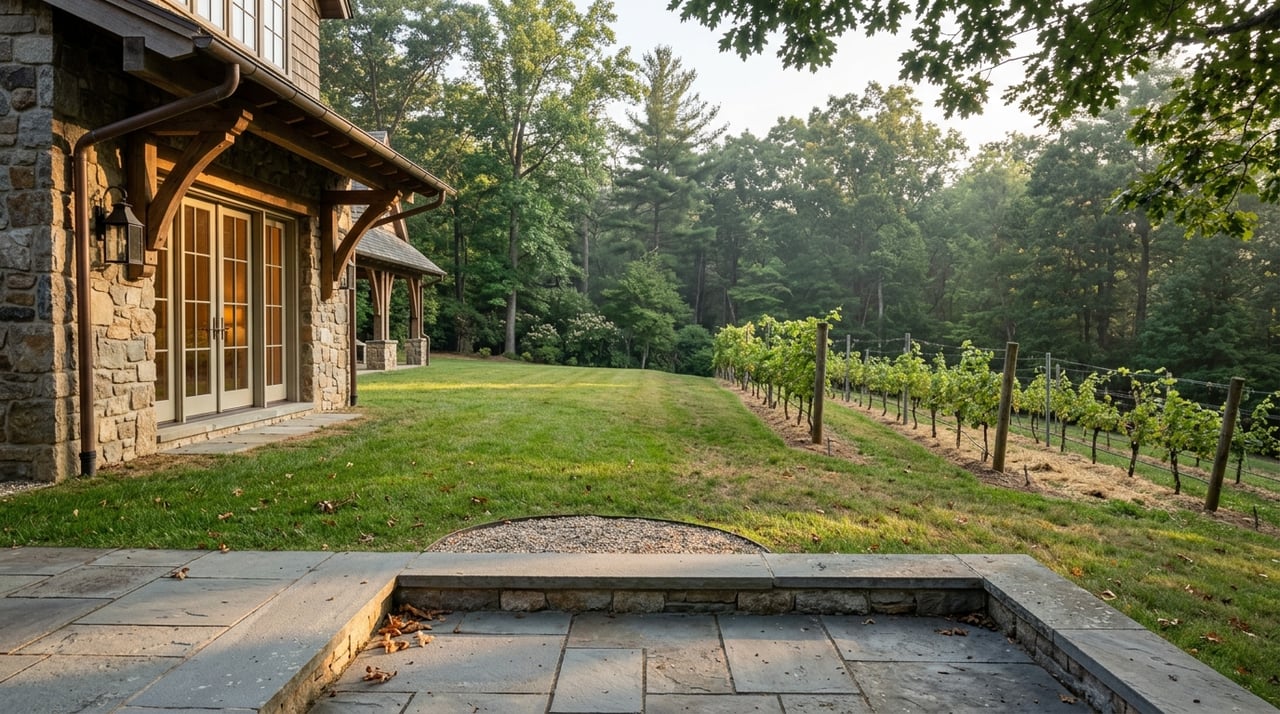
If you want acreage, privacy, and mountain views without feeling cut off from everyday comforts, estate and vineyard living near Hendersonville deserves a closer look. For many second-home and luxury buyers, the challenge is finding a property that feels truly scenic and secluded while still offering access to dining, culture, and regional travel routes. Hendersonville stands out because it blends a working agricultural landscape, a recognized wine-country identity, and a walkable downtown amenity base. Let’s dive in.
Why Hendersonville Fits Estate Living
Henderson County offers a setting that feels both pastoral and connected. The county describes its economy as balanced across agriculture, tourism, and manufacturing, with agriculture and agribusiness estimated at nearly $1 billion annually. It also reports 455 farms averaging 90 acres, which helps explain why larger tracts and rural land remain an important part of the local landscape.
For estate buyers, that matters because the area supports more than a scenic backdrop. You are looking at a region where land, views, and agricultural use are part of the local identity. That can make estate ownership feel grounded in place rather than purely recreational.
Location also strengthens the appeal. Henderson County says it is within about an hour of Asheville and Greenville or Spartanburg, and about two hours from Charlotte and Knoxville. In practical terms, you can enjoy a private mountain setting without giving up reasonable access to airports, dining, healthcare, and regional business centers.
Why Vineyard Buyers Look Here
Hendersonville is not simply adjacent to wine country. It is part of an established wine-growing region. The Alcohol and Tobacco Tax and Trade Bureau recognizes Crest of the Blue Ridge Henderson County as an established American Viticultural Area, and Visit Hendersonville reports that the region has eight wineries.
That established wine presence adds depth to the lifestyle story. Visit Hendersonville describes local wineries producing European vinifera and French-American hybrid grapes in rocky, mineral-rich soils with warm days and cool nights. It also highlights estate-style vineyard settings at a range of elevations, showing how strongly topography and views shape the experience here.
For buyers drawn to the idea of a hobby vineyard, the appeal is easy to understand. You are not imagining a concept that feels out of place. Wine culture is already woven into the area through estate-grown grapes, tasting rooms, scenic overlooks, and long-term land stewardship.
Vineyard Living Is Also a Land Decision
A beautiful tract is not always a viable vineyard tract. NC State Extension makes that clear in its vineyard establishment guidance, noting that temperature, precipitation, soil drainage, slope orientation, elevation, and frost all play a major role in site suitability. In the mountains and Piedmont, bunch grapes can grow well, but success still depends on variety selection, soil management, pruning, and pest control.
That is why vineyard living should be viewed as both a lifestyle choice and a planning exercise. If you are considering planting vines, the land needs to do more than look impressive from the porch. Drainage, rooting depth, frost exposure, and slope can all affect what is realistic.
Extension guidance also recommends soil testing at least a year before planting. For a buyer evaluating estate acreage, that point is important. The right purchase often comes from matching your vision to the actual capability of the site.
Elevation, Views, and the Wine-Country Feel
Part of what makes this area memorable is how elevation shapes the experience of the land. Visit Hendersonville highlights well-known vineyard properties that sit at notable elevations, including Point Lookout at 3,000 feet, Marked Tree at 2,300 feet, and Stone Ashe at 2,700 feet on a bluff. These examples reinforce how mountain views and vineyard culture often go hand in hand here.
For estate buyers, this creates a specific kind of lifestyle appeal. You may be looking for long-range views, privacy, and a property that feels dramatic in every season. Near Hendersonville, those qualities often pair naturally with agricultural potential and a broader wine-country atmosphere.
This is one reason the market can attract second-home buyers and buyers seeking a legacy property. The setting offers visual impact, but it also has substance behind it. The landscape supports both enjoyment and thoughtful long-term stewardship.
Downtown Hendersonville Adds Everyday Convenience
One of the strongest advantages of estate living near Hendersonville is that rural acreage does not have to mean isolation. Visit Hendersonville describes Main Street as curvilinear, park-like, and pedestrian-friendly, with sitting areas, planters, sidewalk dining, public art, shops, restaurants, and local attractions. That gives the area an amenity layer many rural markets struggle to match.
If you are buying a second home, convenience often matters as much as scenery. You may want an easy dinner downtown, a casual afternoon browsing galleries and shops, or a simple way to entertain visiting friends and family. Hendersonville gives you that option without changing the character of the countryside around it.
The downtown calendar also supports a full seasonal rhythm. Visit Hendersonville highlights events such as the NC Apple Festival, Garden Jubilee, Fiesta Hendersonville, Art on Main, and the Bearfootin’ Public Art Walk. For buyers seeking a mountain retreat with year-round lifestyle value, that activity adds meaningful depth.
A Broader Blue Ridge Lifestyle
The appeal extends beyond wine and downtown. Hendersonville is promoted as a Blue Ridge Mountains destination with hiking, biking, outdoor recreation, a culinary scene, craft beverage stops, and arts offerings that include Flat Rock Playhouse and the Blue Ridge Crafts Trails. This helps frame estate ownership here as part of a broader mountain lifestyle.
Agritourism also plays a visible role. Visit Hendersonville notes that apple orchards remain a major part of the area’s identity, especially from early August through late October. Local produce, markets, and seasonal farm experiences reinforce the feeling that this is an active rural landscape, not just a collection of homes on large lots.
For many buyers, that distinction matters. You are not just buying square footage or acreage. You are buying into a place where farming, scenery, small-town amenities, and outdoor living still connect in a very real way.
Due Diligence for Acreage and Hobby Vineyards
When you evaluate a larger parcel, local due diligence matters. Henderson County notes that present-use-value deferment may be available for land used as agricultural, horticultural, or forestland. The county also states that the Land Development Code and Official Zoning Map govern development in unincorporated areas.
Water and wastewater planning are just as important. Henderson County’s Septic & Well Program handles permits for these systems, and the county says septic and well permits are searchable online. If you are considering an older estate parcel or raw land, that can be a useful part of your review process.
This is where experienced guidance becomes especially valuable. A property may look ideal from a lifestyle perspective, but factors such as zoning, existing permits, future building plans, and land suitability can shape both your enjoyment and your long-term investment. For estate, second-home, and vineyard-oriented buyers, careful site selection is often where the smartest decisions begin.
What Buyers Should Keep in Mind
If estate and vineyard living near Hendersonville is on your radar, it helps to focus on a few practical questions early:
- Do you want a scenic estate setting, a true hobby-farm component, or potential vineyard use?
- How important are elevation, long-range views, and sunset orientation?
- Will you need easy access to downtown, regional highways, or nearby cities?
- Does the parcel have the drainage, slope, and frost profile needed for grape growing?
- Are zoning, septic, and well considerations aligned with your plans?
The right property usually balances beauty with usability. In this market, that can mean looking beyond the obvious view and paying close attention to the land itself. When done well, the result can be a property that offers privacy, authenticity, and long-term enjoyment in one of Western North Carolina’s most distinctive settings.
Estate and vineyard living near Hendersonville is appealing because it combines the atmosphere of a mountain retreat with the structure of a working agricultural region and the ease of an active downtown. For buyers seeking a second home, legacy estate, or land with lifestyle potential, that blend is hard to ignore. If you want discreet guidance on site selection, estate properties, or a private search tailored to your goals, Marilyn Wright can help you evaluate the opportunities with clarity and care.
FAQs
Is Hendersonville, NC really a wine-country market?
- Yes. Crest of the Blue Ridge Henderson County is an established American Viticultural Area, and Visit Hendersonville says the region includes eight wineries.
Can you realistically have a hobby vineyard near Hendersonville?
- Potentially, yes, but only if the parcel has the right site conditions, including suitable drainage, slope, elevation, and frost profile.
What makes estate living near Hendersonville appealing?
- You can find privacy, acreage, mountain views, and agricultural character while staying within reasonable reach of downtown Hendersonville and regional cities like Asheville and Greenville-Spartanburg.
What should you check before buying acreage near Hendersonville?
- Review zoning, land-use rules, septic and well records, and whether the site supports your intended use, especially if you are considering a hobby farm or vineyard.
Does downtown Hendersonville add value for second-home buyers?
- Yes. Downtown offers dining, shops, public art, attractions, and recurring events that make rural estate ownership feel more convenient and well-rounded.
